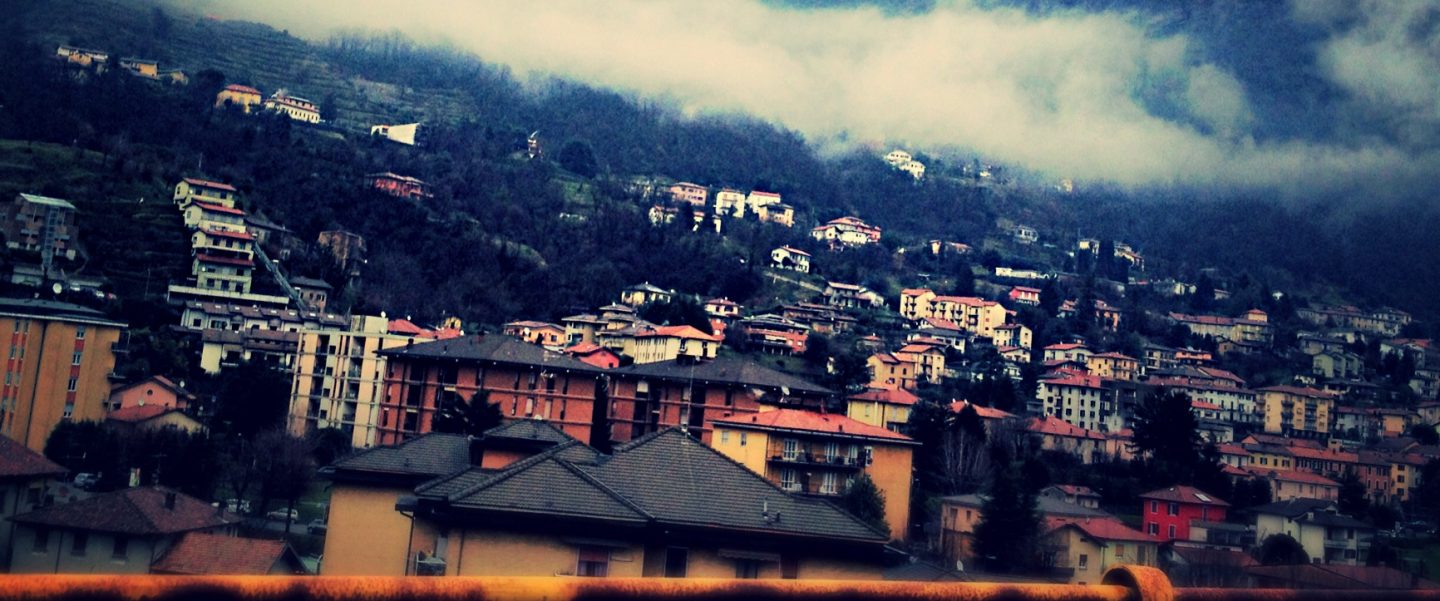
So this post is way overdue since I was in Morocco back in September, but things have been busy ever since with me finishing off my final year at uni and writing my dissertation. However, there’s nothing like a pandemic to help us catch up on things we’ve been putting off for the past 8 months.
As with many trips I have done in the past, my best friend Melanie was once again my companion for this one. She flew out to Barcelona, where I was still living back at the time (god I miss Barcelona) and after a few days of enjoying sangrias, Moritz beer and tapas, we took off for a week in Morocco. As some might say: #tatlanieontour (nobody except us says this).
Fez:
We arrived in Fez on Saturday evening, bubbling with excitement for finally having arrived. My particular excitement died down rather quickly, once I realised that Morocco is not a “feel at home country” (damn it, Three). So it turned out I didn’t have any internet or free calls in Morocco, which with my particular network provider is more shocking than one might think. We made our way to the taxi stand and negotiated a rate for someone to get us to our hotel (a piece of advice: life becomes easier if you travel with someone who speaks French, recommend 10/10). Another advice: taxi drivers in Morocco ALWAYS offer you double the price that the trip is actually worth. Do it better than we did and negotiate.
The driver did take us almost all the way to our hotel. The emphasis does lie on almost, as he explained to us that he couldn’t take us past the Medina of the city because cars weren’t allowed inside. As it happened, our hotel was in the centre of Fez’ medina. For you to be able to visualise how bad of a thing this is: If a demon and a labyrinth had a baby, it would be the Medina of Fez (Fes el-Bali). The medina consists of numerous small streets that are laid out similarly to a labyrinth and which are not mapped out on Google Maps. You can get lost or end up at cul-de-sacs at every corner.
The taxi driver must’ve seen the sheer panic in my eyes, because he then offered to call our riad, the Hotel & Spa Dar Bensouda, to arrange for someone to pick us up. He then left and we stood there, waiting for someone to take us to our hotel. Someone did eventually come and guided us, while carrying our 20kg suitcase to the safety of our hotel. The walk through the medina to our hotel took 20 minutes (meaning: we definitely would’ve gotten lost).
The relief I felt when we arrived at the riad can’t be put into words. Even more so because the hotel was absolutely amazing, beautiful and the owner (Mamoune) extremely polite and made us feel welcome with Moroccan tea while he chatted with us for a good hour. That evening, Melanie and I went to the rooftop of our riad, laid down on one of their sun beds and watched the Moroccan sky above us. All around us were rooftops of other riads and music could be heard from nearby celebrations. It almost felt unreal.
For our first day, we had already booked a trip to Chefchaouen, also known as the blue pearl. This is a city completely painted in blue and a 4-hour car drive away from Fez. Forgive me if I sound harsh, but the only reason Fez is worth visiting (in my opinion) is to go to Chefchaouen. I shall prove my point with pictures:


The small city can be seen within a few hours, so a one-day trip there is completely enough. I don’t, however, recommend taking a 4-hour trip there and then back, only to stay in the actual city for three hours. I say this because our particular tour operator organised the trip this way and my German brain can’t quite grasp the logic behind that. Luckily, we took advantage of this trip and also bought ourselves a Moroccan sim card and topped it up with the help of our tour guide (turns out our Arabic skills were not on par with the machine on the other end of the phone call). Having a Moroccan phone number became extremely handy when later that evening the rude van driver from the very same tour organisation wanted to leave us in front of the medina without organising for us to be taken to the hotel, although that was included in the package. We did call Mamoune (he gave us his number and told us to call him if we ever needed help) and he had someone pick us up.
The following day consisted of us walking around Fez and exploring the Medina and the city. By this point we actually found our way around the Medina without a guide. We went up to the Borj Nord Viewpoint, which is one of the few touristic attractions of the city:
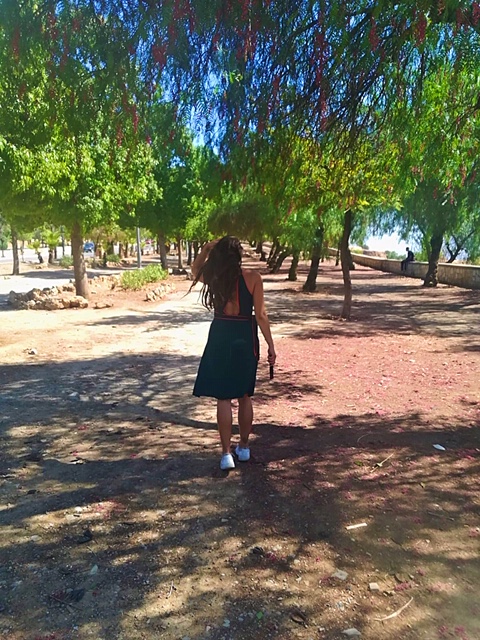
We also managed to visit the Royal Palace, Dar El Makhzen, which can only be seen from the outside and you can’t take pictures of the guards standing in front of it. The palace is located in the well known neighbourhood “New Fez”, Fes el-Jdid, so we walked around to see what else the city had to offer. Unfortunately, most places we intended on visiting were closed, so we actually didn’t see much else.
One memorable thing in Fez was our lunch at The ruined garden. This was a beautiful outdoor eating space in the middle of the Medina with some very tasty food.
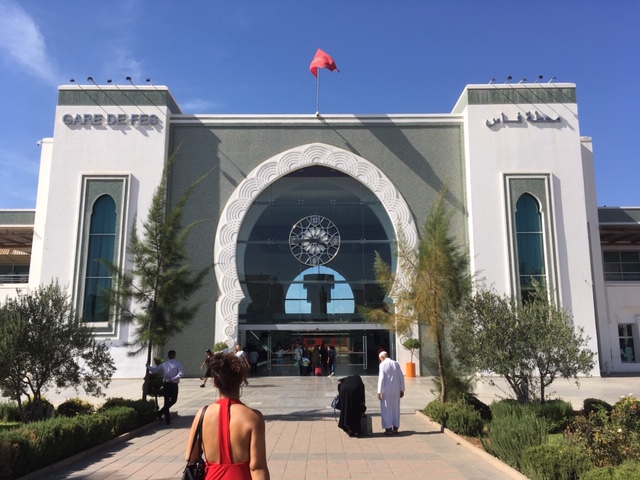
This was the last thing we did before we took a train that afternoon to Casablanca:
Casablanca:
I’ll unapologetically say that Casablanca was my favourite out of the three cities we visited that week. It is modern, beautiful, by the sea, has a breathtaking mosque and good food.
We arrived in Casablanca in the evening and were once again fascinated with the beauty of Moroccan train stations. The 4-hour train ride had also been extremely smooth, with a first class ticket costing a mere £15. That evening we checked into the Kenzi Basma and went to a nearby restaurant for dinner. We had asked reception for a recommendation for a place to eat and the concierge himself took us to the restaurant. Unfortunately, the restaurant was just like the hotel: expensive and not worth the money you paid for it. To be honest, this is quite a Western hotel and not a Moroccan riad, so it was to be expected that we wouldn’t have the same experience as we did in Fez.
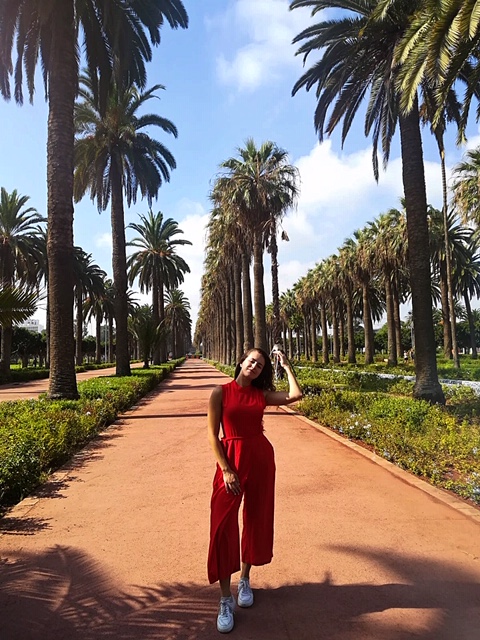
We had only planned one day in Casablanca (which I believe was enough) and wanted to make the most of it. The next day we decided to use Google Maps without using the internet (roads are still shown on the app, even without internet) and walk everywhere we wanted to go. If you have a somewhat central hotel, you can reach everything by foot. Our first stop was the Mohammed V Square, which was only 5 minutes away from our hotel. We then walked all across Boulevard Radchi and Avenue Hassan II (which to me looks a bit like Times Square) until we reached the sea. On our way, we stopped by a local attraction called the Sacre Coeur, which looks just like the one in Paris. However, we could only walk around it and not go inside. We also walked through a lovely park next to the cathedral and stopped for a quick photo shoot (because that’s how extra we are):
Once we got to the sea, we saw the ginormous Hassan II Mosque and walked around it a few times, not believing how beautiful it is. Outside of prayer hours, tourists are also allowed inside to see the mosque. I do advise you wear shoes with socks for this, otherwise you’ll have to walk barefoot through the mosque. We did catch a glimpse inside the building but didn’t have time to go inside, even though we could have:
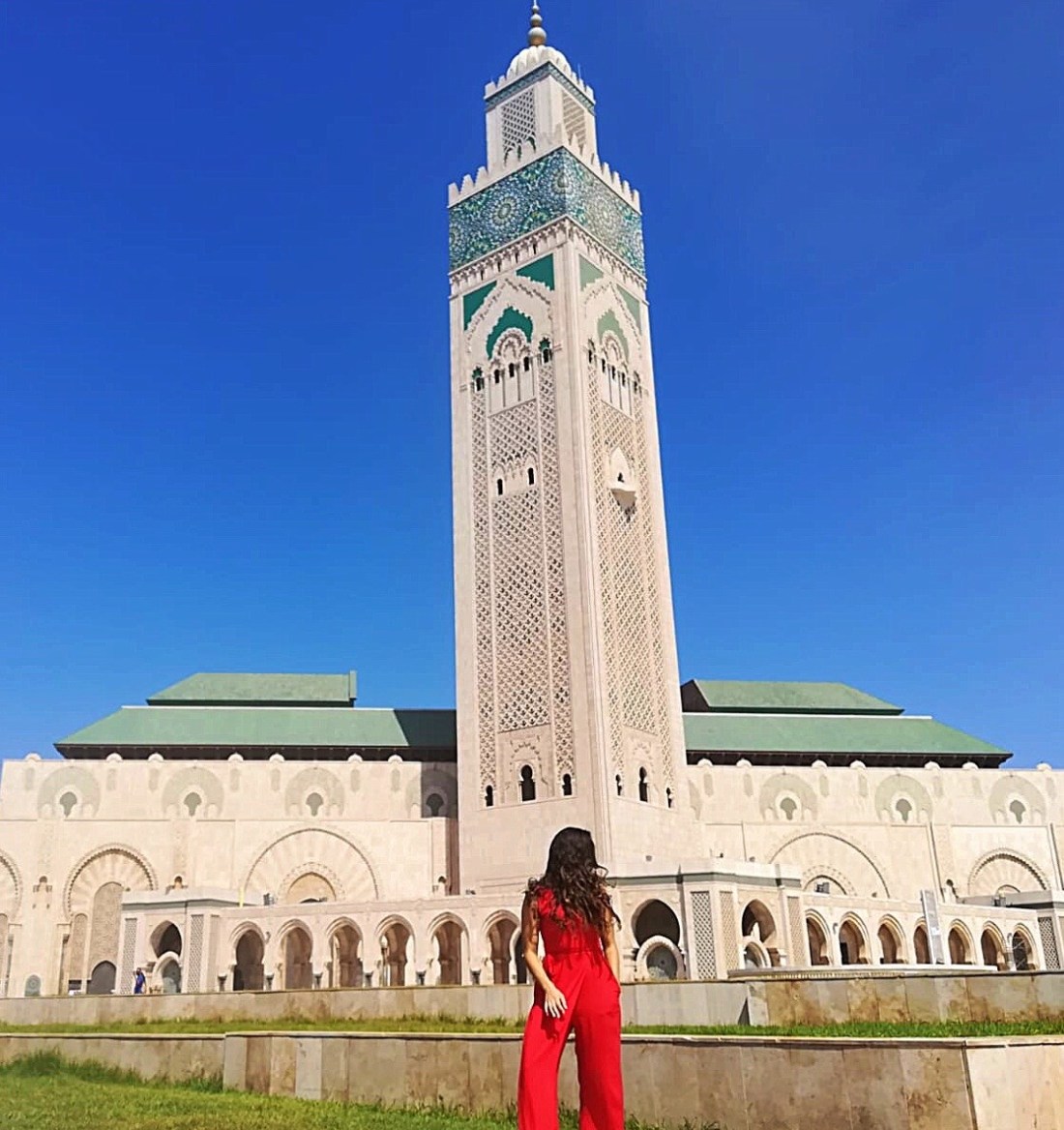
We then walked along the coast, which is right next to the mosque and ended our Casablanca stay with a tasty lunch at the La Sqala:
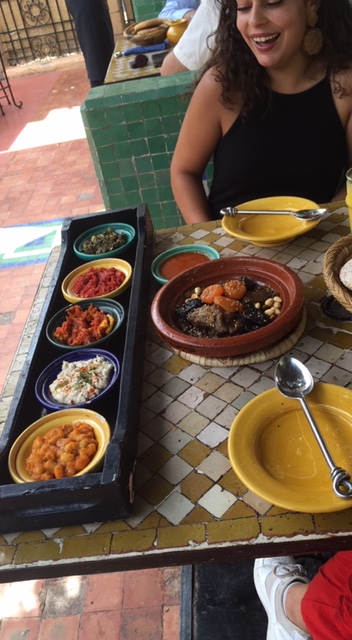
That evening we took a train to Marrakesh, ready for our final stopover of this trip. Once again, the train ride went by super quickly and tickets were dirt cheap.
Marrakesh:
Although our riad in Marrakesh, the Hotel & Spa Dar Baraka & Karam, was inside the local medina as well, it was far easier to find than the one in Fez. Funnily enough, both riads also belong to the same hotel group so are very similar in style. The Marrakesh Medina is much more scattered and less concentrated than the one in Fez and much easier to walk through. During our first evening in Marrakesh, we walked around the medina and went to a local restaurant for dinner.
The next day we had to get up early. At 8am we were picked up from the Jemaa el-Fnaa square to take on a 7-hour journey to the Saharan desert. Alongside a Brazilian couple, a German couple and three Peruvians, we realised that we could understand everyone in the van, which for two language students is a quite rewarding realisation. The trip did have a few breaks, such as Ouarzazate, the “door of the desert” and Aït Benhaddou, where a number of films were shot. Nevertheless, we couldn’t wait to just get to the desert!
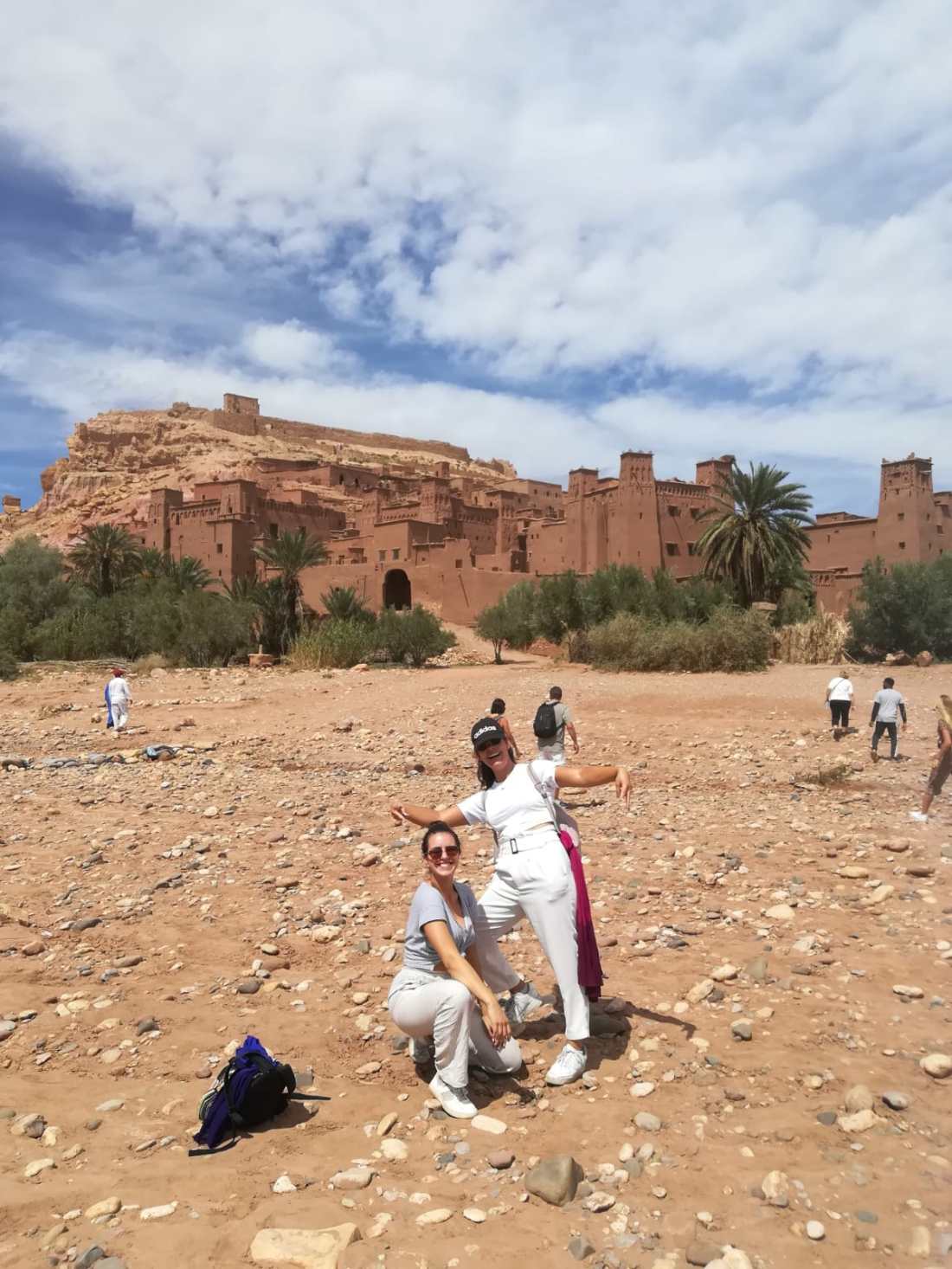
We arrived at the Sahara desert just before sunset. This is where we finally got out of the van and on top of our dromedaries. In a line, we rode them through a part of the desert while the sun was setting behind the dunes:


The pictures don’t make my dromedary any justice. It was by far the ugliest in the group and looked the dromedary equivalent to an alcoholic middle-aged men, but he did carry my ass for over an hour through the desert, so I was in no place to judge.
Following a 1.5 hour ride, we arrived at a camp with 13 tents for us to sleep in. We did share the camp with another group that was there with a different organisation and ended up sharing a tent with a mum and daughter from the Netherlands.
Once at the camp, the local berber guides made some Moroccan tea for us, cooked us a local, three-course meal and told us stories of the region.
That night we all sat in a circle around a campfire, while the berbers were playing local music, singing for us and watched the star-filled sky. I have never before and never since seen stars in the sky the way I did that night.
The next morning we woke up before the sun rose in order to get another dromedary ride during sunrise:
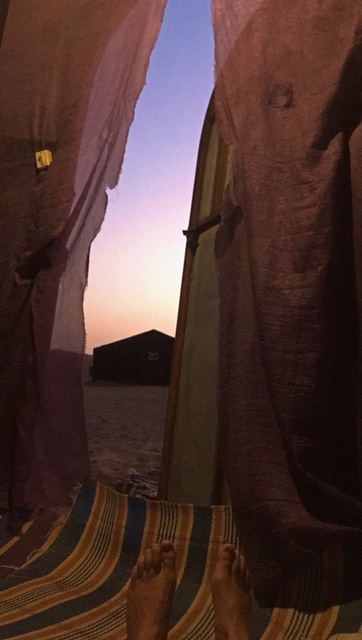
We had breakfast at the camp, rode another 1.5 hours from the camp to the nearest road and made our 7-hour way home right after.
The first thing we did after arriving in Marrakesh was take out our phones (guilty as charged). After all, we hadn’t had any internet connection for over 24 hours. A healthy break, but one we were happy to come back from.
During our final day in Morocco, we once again got up early (call it German efficiency) to make sure we’d be in the queue for the Majorelle Gardens before 9am. This is definitely something I recommend, because people who arrived after us stood in the queue for hours, while we just waited 20 minutes.
Majorelle Gardens is a part of the Yves Saint Laurent Museum that is located next to the garden. For any fashion enthusiasts (not me) this is a must-go. The garden, however, is nice for anyone:


From there, we went on to visit the Bahia Palace, which had me more excited than the following picture might suggest:
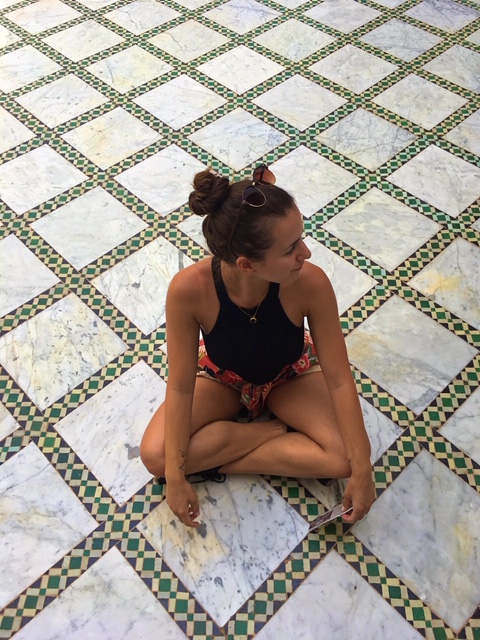
For the rest of the day, we walked around the medina of the city and looked at all the little shops, the souks, selling everything you can possibly think of. You’d think that two Germans would not be approached in such a place if they speak German with each other, but don’t be mistaken. Souk salesmen speak every language we could cover and more. German? Kein Problem, das können die auch. Spanish? Por supuesto! Entra en mi tienda que aqui puedes encontrar de todo. French and Portuguese are not safe either, so we decided to just silently walk through and enjoy the colours, textures and smells the medina had to offer. Here and there we negotiated with a salesmen or other to see if we could bargain cheaper prices for expensive items.
My go-to technique was the following (real-life scenario, prices may vary, do not try this in Europe):
Tatjana: How much does this wooden face statue cost?
Salesmen: Only 480 dirham (£40).
Tatjana: OH MY SWEET LORD JESUS! I AM A POOR STUDENT SIR, HOW CAN YOU ASK FOR THIS MUCH MONEY FOR THIS PIECE OF WOOD. HELL NAAAH IM OUTTA HERE! MY POOR LITTLE SOUL CANNOT SURVIVE SUCH PRICES!
I then proceeded to walk out of the store while the salesmen followed me, dropping the price with each step he took. By the time I was outside, I would’ve gotten it for £5. Too bad it wouldn’t have fit into my suitcase.
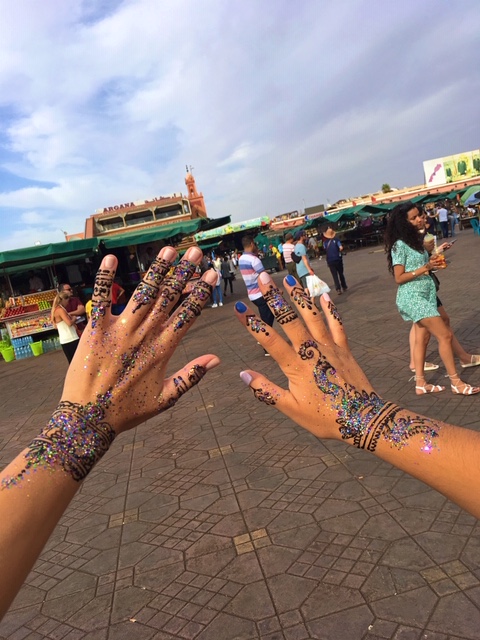
The labyrinth-like streets of the medina led to the Jemaa el-Fnaa square, which we were picked up from the previous day. We went up to a Mezzanine restaurant, which offered food and tea on a rooftop and then headed back to the square to get some henna done. Now be prepared to be absolutely ripped off. You will be asked to pay up to £50 for a small pattern and it’s just not worth all that money. We managed to negotiate our way down to £20 for both of our hennas which didn’t have the lady making them thrilled, but we all knew it was still more than it is actually worth:
We finished off the trip by having a final tea on a rooftop overlooking the square and made our way back to the hotel and then to the airport to fly back to Barcelona on the same evening.
I’m not going to lie, Morocco was quite an adventure and I was anxious a few times and felt uncomfortable, especially in Fez. For someone who grew up in the West, the constant cat calling on the street and the stares are quite intimidating. I did “get used” to it or shot back evil glares where they were deserved and felt completely comfortable by the end of the trip. I do recommend, however, to go to Morocco with a partner. If you go with a male companion, you will not get called out on the street and you get your own tent in the desert…
I can’t wait for the next trip once this pandemic is over!
Now if you excuse me, there is a dissertation I have to finish.


One thought on “Moroccan adventures”